Chefchaouen & Fes —
Morocco's North,
Honestly Explained
14 licensed local guides. The blue medina of the Rif Mountains and the world's largest car-free city — two of Morocco's most rewarding destinations, best visited together.
- 14 local guides
- 79 answered questions
- Free to ask
North Morocco
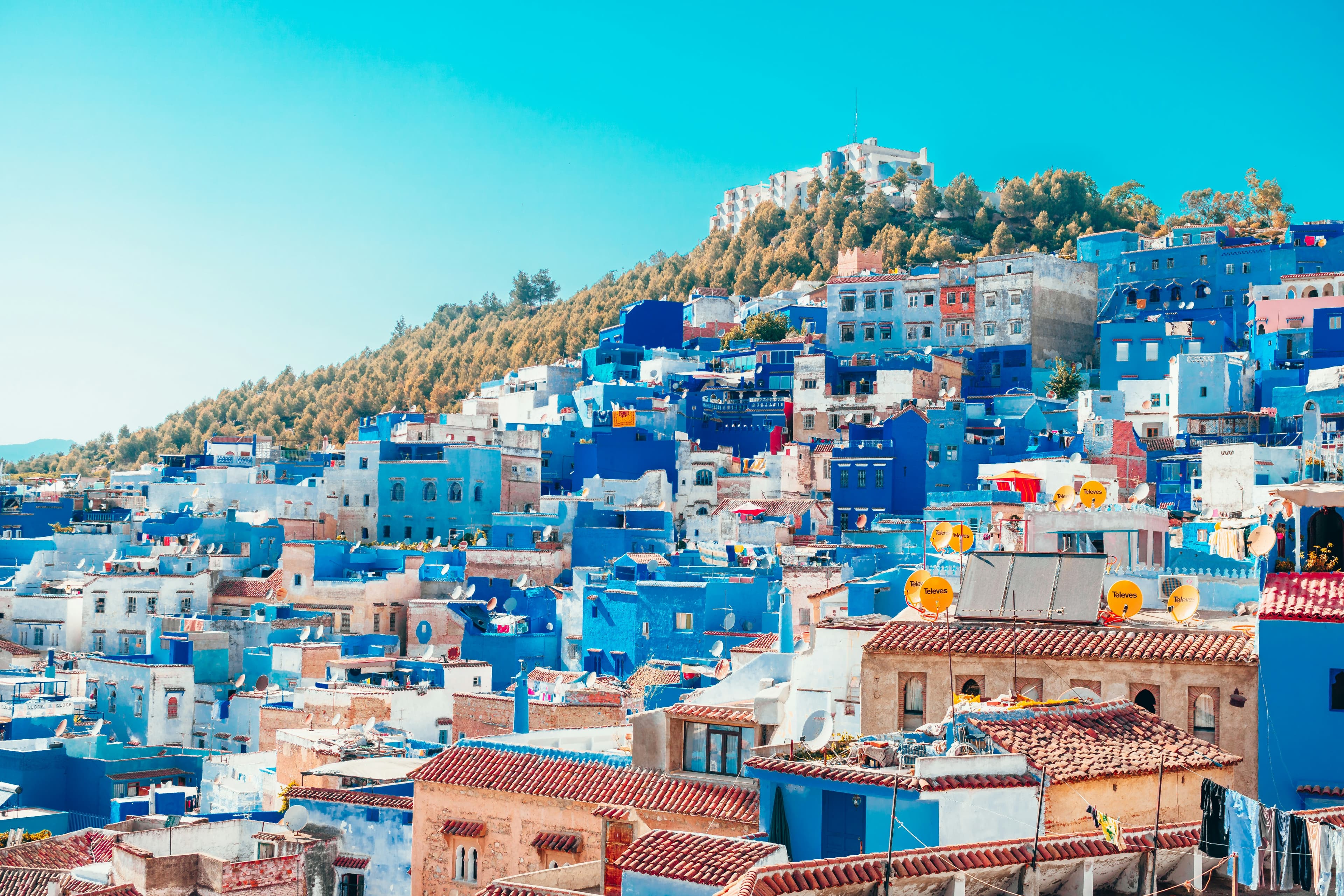
The north of Morocco is older, cooler, and more Andalusian in character than the south. Cities like Fes and Chefchaouen carry centuries of Islamic scholarship, Jewish coexistence, and Spanish-Moorish architecture that the imperial cities of the south don't quite replicate. The climate is also different — Chefchaouen sits at 600m in the Rif Mountains, and even August is bearable.
Chefchaouen is a small mountain town famous for its blue-washed medina — genuinely beautiful, genuinely photogenic, and increasingly crowded. Arrive at dawn, stay two nights, and you'll find it without the performance. Arrive at 11am in July and you'll be sharing alleys with tour groups. The city is worth it either way; the experience differs considerably.
Fes — what it actually is
According to Travilto's local-guide network, Fes is Morocco's most historically layered city — home to Al-Qarawiyyin (the world's oldest continuously operating university, founded 859 AD), a medina of 9,000 streets, and a tannery quarter unchanged in method for over 500 years. No other city in Morocco rewards time the same way Fes does.
The two cities work naturally as a pair. They are 3.5 hours apart, complementary in character — Chefchaouen is small and visual; Fes is vast and layered — and most travelers doing north Morocco visit both on the same trip. Chefchaouen first is the right order: it is gentler, and the contrast when you arrive in Fes makes both cities more vivid.
What travelers ask about most
Questions our north Morocco guides answer every week — click any topic to ask directly.
How to combine Chefchaouen and Fes
Most travelers have 3–5 days for north Morocco. Here's how to use them.
You'll see both cities. You won't fully absorb either.
Day 1: arrive Chefchaouen, evening walk in the medina. Day 2: full morning in Chefchaouen (Ras El Maa, the kasbah, the viewpoint above town), afternoon drive to Fes (3.5 hours). Day 3: full day in Fes with a guide — tanneries, Al-Qarawiyyin quarter, Bou Inania madrasa. You'll scratch the surface of Fes but leave wanting more. The right trip if time is the constraint.
Two nights each. Enough time to actually slow down.
Two nights in Chefchaouen, two nights in Fes. Enough time to slow down in the blue medina and actually spend two proper days in Fes el-Bali. The second day in Fes is always better than the first — the scale of it starts to make sense. This is what our guides recommend to most travelers.
A week here is genuinely unhurried and rarely regretted.
Add Meknes and Volubilis (Roman ruins, 45 minutes from Fes), a night in the Rif Mountains between Chefchaouen and Fes, or a detour to Tangier at the start. A week in north Morocco gives each city the time it deserves and still leaves room for detours.
Chefchaouen
The blue city · Rif MountainsWhat to know before you go. The blue city is real. So are the crowds. Here's how to navigate both.
Walk the medina at dawn
The blue walls, the cats, the empty lanes — this is the Chefchaouen that exists before 9am. After that, the tour groups arrive. Set an alarm.
Ask about this →Climb to the Spanish Mosque viewpoint
Above the town, looking down over the blue rooftops and the Rif Mountains behind. Best at sunset. The path is obvious — follow anyone walking uphill with a camera.
Ask about this →Ras El Maa waterfall
At the edge of the medina — local women wash clothes here, children play in the water, and it's one of the most genuinely unposed scenes in Chefchaouen. Worth ten minutes of quiet observation.
Ask about this →The kasbah museum
Small, honest, and almost never crowded. Good context for the town's Andalusian-Moroccan history before you walk the streets.
Ask about this →Fes el-Bali
The ancient medina · 9,400 streetsHow to approach the world's largest car-free medina. No map fully works. Here's where to start.
Chouara Tannery from above
The tannery is viewed from the rooftops of surrounding leather shops — they'll offer you mint to hold against the smell and hope you buy something after. You don't have to. The view of the dye vats is genuinely extraordinary and unchanged in method for centuries.
Ask about this →Bou Inania Madrasa
The finest example of Marinid architecture in Fes — intricate zellige tilework, carved cedar, and a courtyard that photographers have been shooting for a hundred years. Less crowded than the tannery. One of the few religious sites in Fes open to non-Muslims.
Ask about this →Al-Qarawiyyin Mosque & University
Founded in 859 AD — the oldest continuously operating university in the world. Non-Muslims cannot enter, but the exterior and the surrounding Andalusian-influenced quarter are worth an hour of slow walking. A guide adds essential context here.
Ask about this →The Mellah (Jewish quarter)
Fes had one of Morocco's largest Jewish communities. The Mellah is quieter and less visited than the main medina — distinctive architecture, a covered market, and a large cemetery on the hill above. One of the most overlooked hours in Fes.
Ask about this →Nejjarine Fountain & Wood Museum
A beautifully restored 18th-century caravanserai housing a museum of Moroccan woodwork. The fountain square outside is one of the best spots in the medina to sit, have a tea, and watch the city move.
Ask about this →Where to stay in Chefchaouen & Fes
Each city has a distinct accommodation logic — they work differently.
Small, family-run, and almost universally well-priced. The medina is walkable from anywhere inside it. Book early in spring and September — it fills fast.
Staying inside the old medina means waking up inside one of the world's great living cities. The better riads have rooftop terraces with views over the minarets. Worth the premium.
Modern, easier to navigate, closer to the train station. A reasonable choice if the medina feels overwhelming. You will not feel Fes from here.
Close to the main medina gates, quieter than the deep souq alleys, easier for taxis. The sweet spot between accessibility and atmosphere.
FAQ — Chefchaouen & Fes travel
Answers drawn from Travilto's local-guide network and traveller questions.
How many days do you need in Chefchaouen?
Do you need a guide in Fes medina?
What is the best order — Chefchaouen first or Fes first?
Is Chefchaouen as blue as it looks in photos?
What are the Fes tanneries and how do you visit them?
How do you get from Chefchaouen to Fes?
14 local guides answer questions about Chefchaouen and Fes every week.
Our Fes guides grew up in the medina — they know which leather shop gives honest rooftop access without a hard sell, which riad serves a real breakfast, and when the tannery light is best for a photograph. Our Chefchaouen guides know which guesthouse is worth the price and which alley to be in at 7am. Ask them directly.
Ask a north Morocco guide →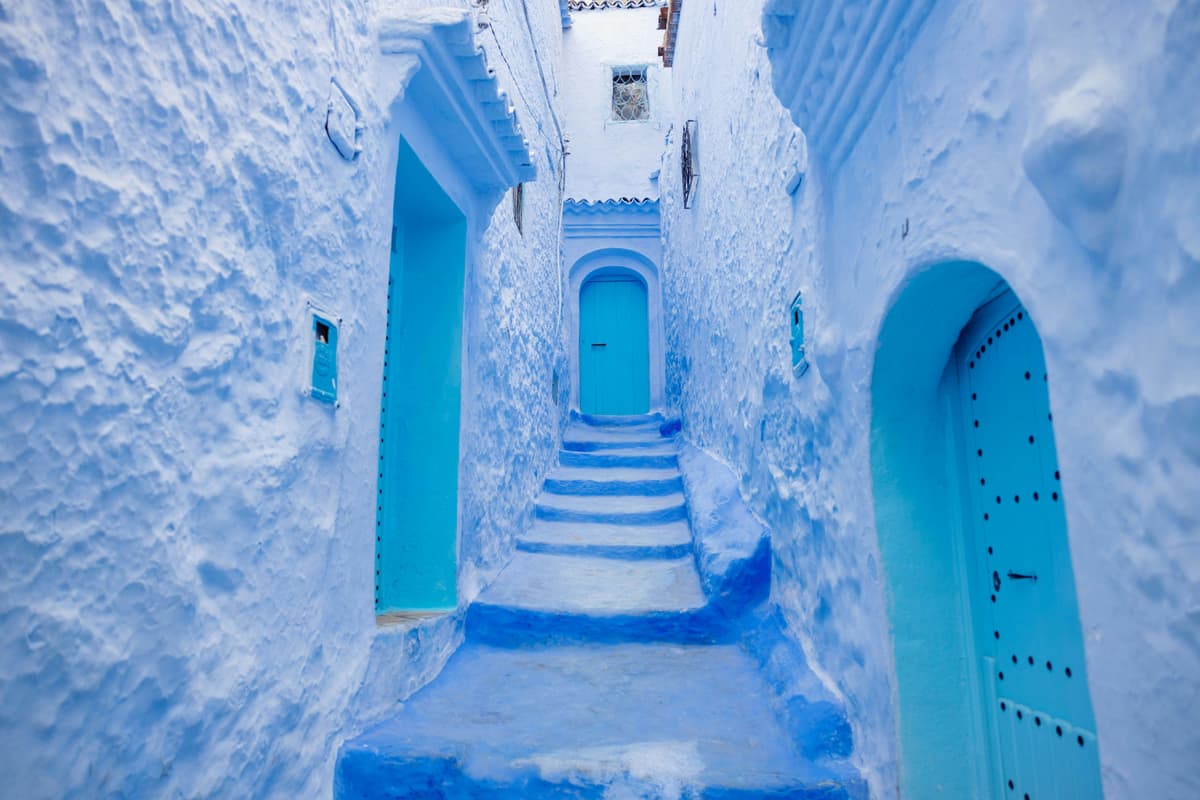
More Morocco guides
Your north Morocco trip starts with a question.
Blue medinas, ancient universities, mountain roads — describe what you're after and our guides answer in seconds.
Ask about Chefchaouen & Fes