TraviltoAsk anything about MoroccoAsk AI
Morocco · Desert routes12 min read

Marrakech to Merzouga: the complete route guide.

The drive from Marrakech to Merzouga is 560km and takes 9–10 hours straight through. Nobody should do it straight through. The Route of a Thousand Kasbahs — the road east through the High Atlas to the Sahara — is one of the best drives in Africa. Ait Ben Haddou, the Dades Gorge, the Todra Gorge: every stop is worth the time. This guide covers the full route, how many days to allocate, and what you would regret skipping.

Travilto Editorial
Reviewed by the local-guide network · 47 licensed guides
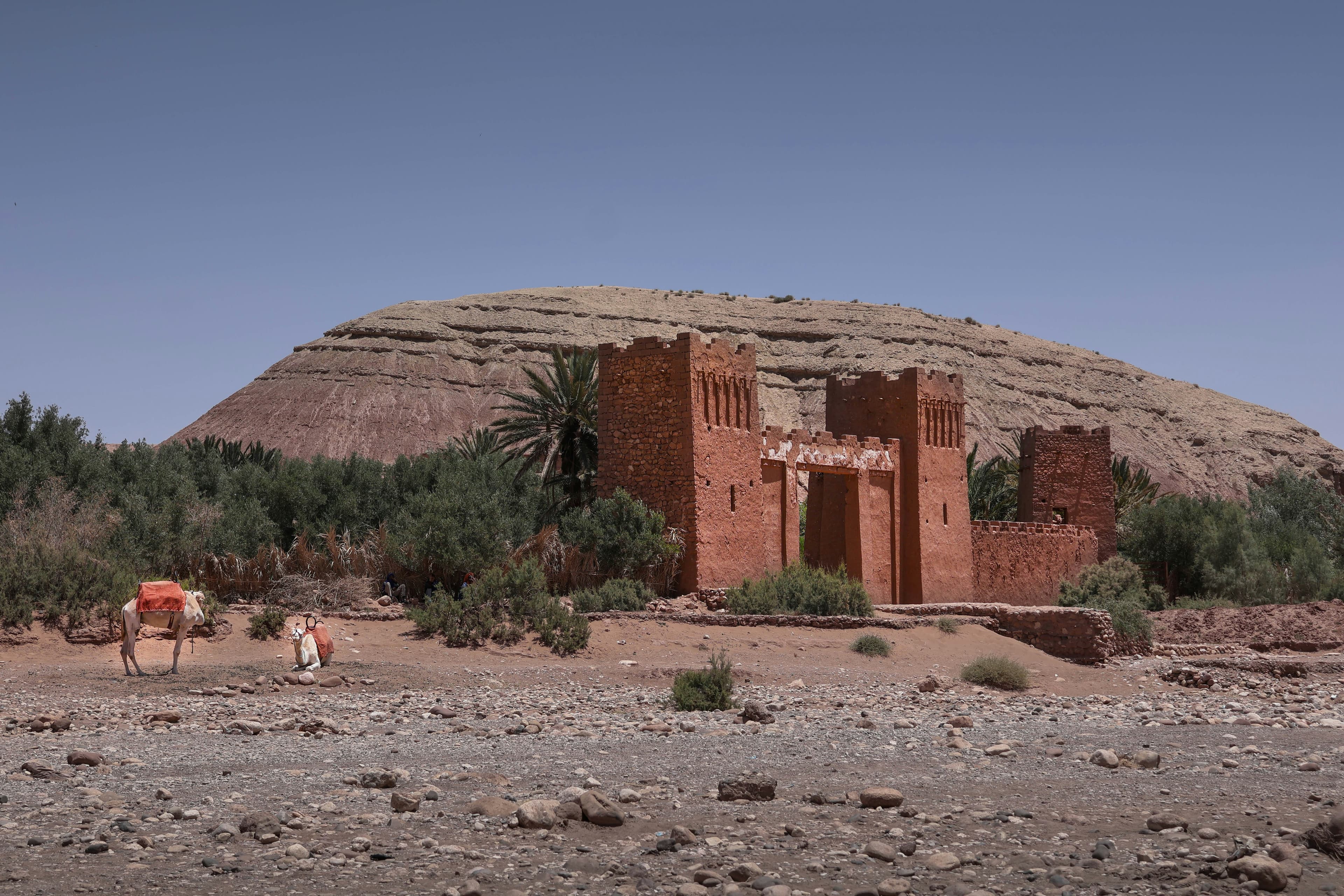
Ait Ben Haddou red mud kasbah ruins with camel — on the route from Marrakech to Merzouga

Ait Ben Haddou — the most photographed stop on the Marrakech–Merzouga route.

Route at a glance
Total distance
~560km one way
Direct drive time
9–10 hours
Recommended days
3 days (2 nights away)
Main route
N9 → N10 (via Tizi n'Tichka)
Day 1 overnight
Dades Gorge area
Day 2 overnight
Desert camp at Erg Chebbi

Every stop on the route

The stops below run in order from Marrakech east to Merzouga. All distances are approximate from central Marrakech.

Stop 1
Tizi n'Tichka Pass
Distance
~95km from Marrakech
Time needed
No stop required (15 min photo)

At 2,260m, Tizi n'Tichka is the highest mountain pass in North Africa accessible by paved road. The drive from Marrakech is rewarding: the city gives way to the High Atlas in about 45 minutes, and the road climbs through a series of dramatic switchbacks. There are safe pull-offs for photos at the summit. In winter, the pass occasionally closes for a day or two after heavy snowfall.

Stop 2
Ait Ben Haddou
Distance
~180km from Marrakech
Time needed
2–3 hours (don't skip)

Ait Ben Haddou is a UNESCO World Heritage ksar (fortified village) built in earthen architecture, inhabited since at least the 11th century and used as a filming location for Gladiator, Game of Thrones, and Lawrence of Arabia. Cross the river on foot (shallow most of the year) and walk the kasbah uphill to the granary at the top. The view from above — red mud towers rising from the valley floor, the Atlas in the background — is one of the best in southern Morocco.

Stop 3
Ouarzazate
Distance
~200km from Marrakech
Time needed
1–2 hours or overnight

Called the 'Hollywood of Morocco' for its film studios and sunny climate. The Atlas Film Studios here are the largest in the world — tours run daily. Ouarzazate is also a practical overnight stop on Day 1 if you arrive late, though most 3-day tours push further to the Dades Gorge for the overnight. The road east from Ouarzazate along the N10 is the Route of a Thousand Kasbahs — named for the almost continuous succession of mud-brick fortresses visible from the road.

Stop 4
Dades Gorge
Distance
~300km from Marrakech
Time needed
Overnight (Day 1 stop)

The Dades Valley opens dramatically as you drive east — narrow canyons, sculpted pink rock formations called the 'Monkey Fingers', and a river winding through palms and rose fields. Most 3-day Merzouga tours overnight here, giving you a morning walk in the gorge before continuing east. The road into the gorge climbs steeply — most guesthouses are in the upper canyon where the scenery is best. Dinner at a guesthouse terrace overlooking the canyon at dusk is a reliable highlight.

Stop 5
Todra Gorge
Distance
~370km from Marrakech
Time needed
1–2 hours (Day 2 morning)

Todra Gorge is one of the most striking landscapes in Morocco: a narrow slot canyon where the walls rise 300m vertically on both sides and the gap narrows to 10m at its tightest point. A cold river runs along the canyon floor. The gorge is 15km north of the town of Tinghir, reached by a good paved road. Rock climbers come from across Europe to climb the walls. For most travelers, 1–2 hours in the gorge — walking the lower section and eating at one of the cafés where the canyon widens — is sufficient before continuing to Merzouga.

Stop 6
Merzouga / Erg Chebbi
Distance
~560km from Marrakech
Time needed
1 night minimum, 2 nights ideal

Merzouga town sits at the base of Erg Chebbi — the 22km-long, 150m-high sand sea that is Morocco's most iconic desert landscape. Arriving in late afternoon, you'll have time to check into your camp, mount a camel for the 45–90 minute trek into the dunes, watch sunset from a dune crest, eat dinner at camp, and wake at 5am for sunrise. Two nights gives more time for sandboarding, quad biking, and visiting the fossilized sea bed in the surrounding hamada.


The ideal 3-day itinerary

Day 1
Marrakech → Dades Gorge (5.5–6 hrs driving)
  • Early departure from Marrakech (7–8am recommended)
  • 30-minute crossing of Tizi n'Tichka pass — photos at the summit
  • 2.5-hour stop at Ait Ben Haddou — cross the river, climb the kasbah, lunch
  • Continue through Ouarzazate (quick stop or drive-through)
  • Arrive Dades Gorge by late afternoon — walk the lower gorge before dinner
  • Overnight at a guesthouse in the upper canyon
Day 2
Dades Gorge → Todra Gorge → Merzouga (4.5 hrs driving)
  • Early morning walk in the upper Dades Gorge before breakfast
  • Drive east to Tinghir (1.5 hours), continue into Todra Gorge
  • 1.5-hour walk in Todra Gorge — the slot section, then the wide canyon
  • Lunch at a café in the gorge before continuing southeast to Merzouga (2.5 hours)
  • Arrive Merzouga by late afternoon — transfer to your camp by camel or 4x4
  • Sunset camel trek into Erg Chebbi, dinner at camp, night under the stars
Day 3
Merzouga → Marrakech (return)
  • 5am wake-up for sunrise on the dunes (worth the alarm)
  • Return to guesthouse for breakfast and check-out
  • Return options: same route back (9–10 hours total), or alternative via Midelt/Ifrane (adds 1.5 hours, different scenery)
  • Stop options on return: Rissani market (Tuesday, Thursday, Sunday), Erfoud fossil shops, Tinghir medina
  • Arrive Marrakech by evening
The most common mistake: Leaving Marrakech at 9 or 10am on Day 1 and trying to reach Dades Gorge before dark. The drive is 5.5–6 hours with a proper Ait Ben Haddou stop. Leave by 7:30am or accept that you'll arrive at the gorge after nightfall and miss it entirely.

Practical tips for the drive

Cash at ATMs before leaving Marrakech

ATMs exist in Ouarzazate and Tinghir but not always at gorge guesthouses or desert camps. Take 500–800 MAD per person in cash for meals, tips, and activities.

Fill up with fuel in Ouarzazate

Fuel stations exist along the N10 but can be spaced 60–80km apart. Ouarzazate, Tinghir, and Erfoud are reliable stops. Keep the tank above half whenever possible.

Book camp accommodation in advance

Good desert camps — especially luxury ones — book out weeks ahead in peak season (October–November, March–April). Walk-in availability is limited and the remaining options are often the lowest quality.

Don't skip the gorge at dawn

The Dades and Todra gorges are dramatically more beautiful in early morning light before tour buses arrive. If you're overnight at Dades, set an alarm for 6:30am. You'll have the canyon to yourself.

Layers for the desert night

Camp temperatures can drop 20°C after sunset. A warm fleece and sleeping bag are non-negotiable, even in spring and autumn. Most camps provide blankets but not always a good sleeping bag.

Camel trek timing

The classic timing is arriving at camp by camel just before sunset — 45–90 minutes through the dunes. Ask your camp at what time to start the trek to arrive at the dune crest while the light is still golden.

Book a guided Merzouga tour on Travilto

Frequently asked questions

How long is the drive from Marrakech to Merzouga?+

The direct drive is approximately 560km, taking 9–10 hours without stops. Almost all organized tours split this over 2 driving days: Day 1 to Dades Gorge (~5.5 hours with Ait Ben Haddou stop), Day 2 to Merzouga via Todra Gorge (~4.5 hours).

Can you drive from Marrakech to Merzouga in one day?+

Technically yes, but it means 9–10 continuous hours of driving with no time for Ait Ben Haddou, Dades Gorge, or Todra Gorge. Travelers who do this typically regret missing the stops, which are among the best parts of the journey.

Is Ait Ben Haddou worth stopping at?+

Unequivocally yes. It's a UNESCO World Heritage kasbah with origins in the 11th century, the most architecturally impressive stop on the entire route. Budget 2–3 hours: 45 minutes to cross the river, 1–1.5 hours to walk to the granary at the top.

Do you need a 4x4 for the Marrakech to Merzouga route?+

No — the main route (N9 over Tizi n'Tichka, then N10) is entirely paved and suitable for standard cars. A 4x4 is only needed if driving into the dunes or accessing remote camps via unpaved piste.

What is the best time of year for this drive?+

October–November and March–April are ideal. Temperatures at Merzouga are 22–30°C by day, 8–15°C at night. Avoid June–August (Merzouga reaches 45°C+). Winter mountain passes can close briefly after snow.

Should you use a guide or drive independently?+

Either works. Organized tours include accommodation, meals, and camel treks. Independent driving is feasible if you can navigate rural roads and have booked desert camps in advance. Language is less a barrier than logistics.


Related guides

Merzouga vs Zagora Desert — which should you choose?2-day vs 3-day Marrakech desert tour — full comparisonMorocco desert tour packing list — what to bringAgafay Desert vs Sahara — what's the difference?All Morocco travel guides

Ready to plan?

Book a verified Marrakech–Merzouga tour — with guide, transport, and camp.

Plan this route on Travilto →

Free to use · Verified tour operators · 47 licensed local guides