Agadir at a glance
Agadir divides Morocco travelers into two camps: those who came for medinas and imperial history (who find it too modern and soulless), and those who came for sun, beach, and relaxation (who never want to leave). Both camps are right. Agadir is not Marrakech. It is not supposed to be.
The city was razed to the ground by an earthquake on February 29, 1960 — 15 seconds, 6,000 dead, every building levelled. What was rebuilt is rational, modern, and functional. What survived — the coastline, the climate, the Souss Valley behind it, and the Amazigh culture of the surrounding region — is extraordinary.
8 best things to do in Agadir
Agadir Beach (Plage d'Agadir)
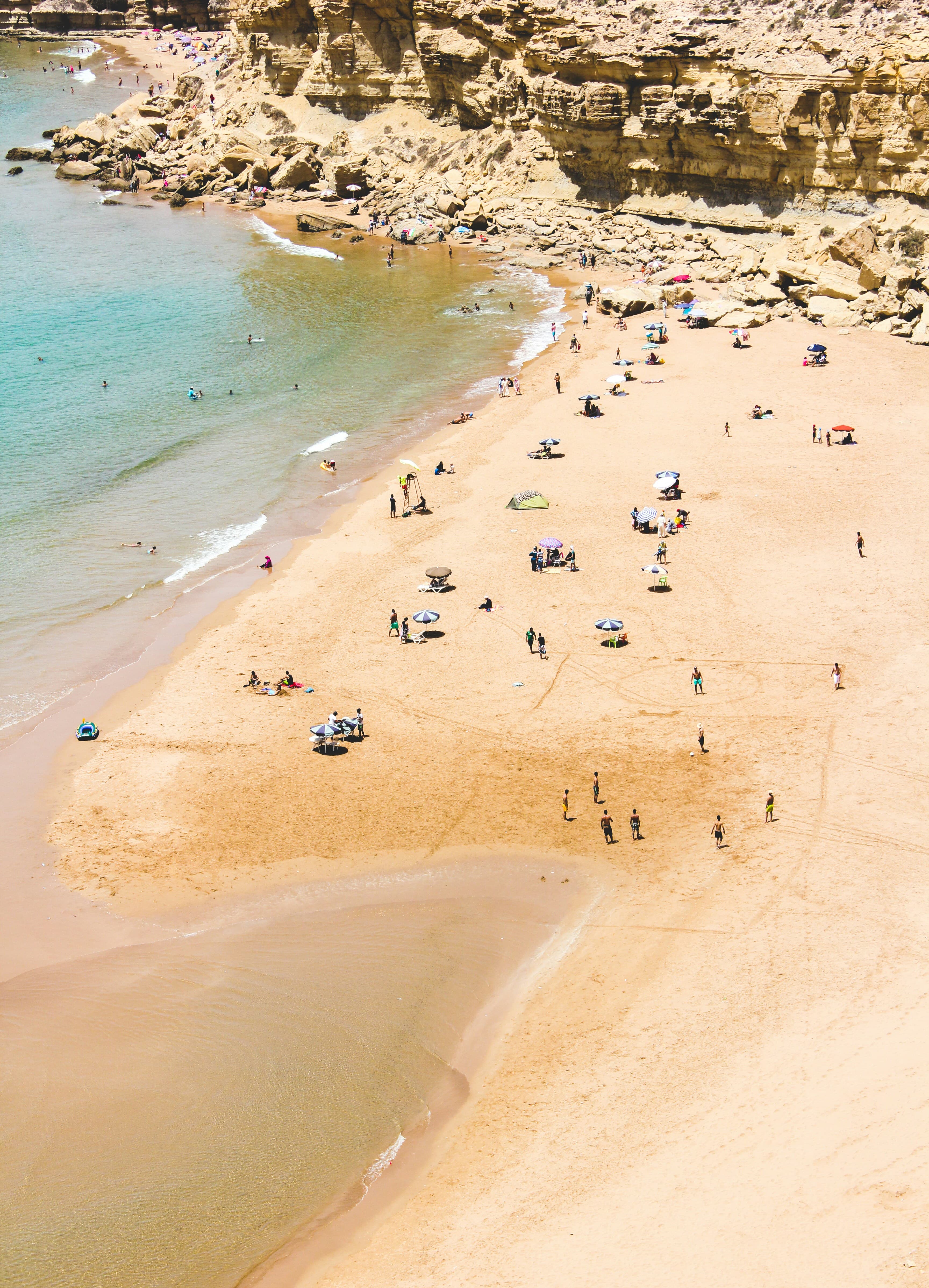
Agadir's reason for existence: a near-perfect Atlantic beach with fine golden sand, reliable sunshine, and calm enough surf for casual swimming in summer. The beach promenade lined with cafés and restaurants runs its full length, and the Souss estuary to the south adds a wildlife dimension — flamingos are visible from the beach in winter months.
The Old Kasbah (Agadir Oufella)
Perched 236 metres above the city, the ruins of the 16th-century Agadir Oufella Kasbah overlook the entire bay. The 1960 earthquake (6,000 dead, the city razed in 15 seconds) destroyed most of the original structure. A single Arabic inscription survives on the gate: "Fear God, Love the King, Respect the Nation." The hill also has a recreated traditional Amazigh village, Amazigh Heritage Museum.
Souk El Had — Agadir's Grand Market
Agadir's main covered market is one of the biggest in Morocco, with over 6,000 stalls. Unlike Fes or Marrakech, it was rebuilt after 1960 to a planned grid — wide aisles, clear signage, and a logical layout. The food section is particularly good: Souss Valley produce (tomatoes, citrus, argan), fresh fish, and Amazigh Berber specialities like amlou (argan, honey, and almond paste).
Taghazout Surf Village
15 km north of Agadir, Taghazout is one of Africa's most celebrated surf spots — consistent Atlantic point breaks, a warming Moroccan sun, and a village that has evolved from quiet fishing community to international surf destination without losing its character. Anchor Point, Hash Point, and Killer Point are the main breaks. Beyond surfing, the village is a template for slow travel in Morocco.
Argan Oil Country & the Goat Trees
The Souss Valley between Agadir and Essaouira is the global heartland of argan oil production — a UNESCO-designated biosphere. The endemic argan tree produces a fruit whose kernel yields the prized oil. Goats climb freely into the trees to eat the fruit, digesting the pulp and passing the nut, which is collected by local Amazigh women to produce oil. Women's cooperatives in the valley welcome visitors and demonstrate the traditional grinding process.
Souss-Massa National Park
Souss-Massa National Park covers 340,000 hectares of Atlantic coastline, river estuary, and argan forest south of Agadir. It protects the bald ibis (northern bald ibis, critically endangered), flamingos, Barbary ground squirrel, and Dorcas gazelle. The park's beach at Sidi Rbat is pristine and car-free — one of Morocco's wildest Atlantic stretches.
Agadir Fishing Port & Fresh Seafood
Agadir's deep-water fishing port is one of Morocco's most active, processing octopus, sardines, and white fish for export across Europe. The restaurants clustered at the port gate serve whatever was unloaded that morning — grilled, fried, or tagine-style. The sardine festival in summer (when the town smells of grilling fish) is a local institution.
Amazigh Heritage Museum
The Amazigh Heritage Museum in Agadir houses an important collection of Amazigh jewellery, clothing, tools, and art from the Souss region — one of the most significant Amazigh cultural zones in Morocco. The Souss was never fully Arabised, and Tachelhit (southern Berber) is still the first language for many rural communities in the region.
Agadir vs Marrakech — which should you choose?
| Agadir | Marrakech | |
|---|---|---|
| Beach | ★★★★★ 10 km Atlantic | ✗ None |
| Medina / culture | ★☆☆☆☆ Modern city | ★★★★★ Historic UNESCO medina |
| Desert access | ★★☆☆☆ Zagora (6h) | ★★★★★ Merzouga (4h tour) |
| Relaxation pace | ★★★★★ Very relaxed | ★★☆☆☆ Intense & busy |
| International flights | ★★★★★ Direct from Europe | ★★★★★ Direct from Europe |
| Surf | ★★★★★ Taghazout nearby | ✗ None |
| Food scene | ★★★☆☆ Good seafood | ★★★★★ Morocco's best variety |
| Families with kids | ★★★★★ Ideal | ★★★☆☆ Medina overwhelming |
| First-time Morocco | ★★★☆☆ Easy intro | ★★★★★ Essential |
When to visit Agadir
Winter
Dec–Feb · 20–22°C
★★★★★
Best for European winter escapes. Dry, warm, uncrowded. Sea is rough — not ideal for swimming.
Spring
Mar–May · 22–26°C
★★★★★
Best all-round. Warm sea, light crowds, wildflowers in the Souss Valley. Good surf season ending.
Summer
Jun–Aug · 24–28°C
★★★☆☆
Peak season. Busy and expensive. Sea is calm and warm. Crowds on the beach.
Autumn
Sep–Nov · 22–26°C
★★★★★
Excellent. Post-summer sea, good prices, surf season begins. Best value months.
How to get to Agadir
| From | Option | Duration | Cost |
|---|---|---|---|
| Marrakech | CTM / Supratours bus | 3.5–4 h | €12–18 |
| Marrakech | Grand taxi | 3 h | €15–20/seat |
| Marrakech | RAM domestic flight | 50 min | €40–90 |
| Essaouira | CTM bus | 2.5 h | €6–9 |
| Casablanca | CTM bus | 7 h | €22–30 |
| Europe (direct) | Ryanair / easyJet / TUI | 2.5–4 h | €40–120 |
Frequently asked questions
Is Agadir worth visiting?+
Yes — if you want beach, sun, and a relaxed pace. Agadir is Morocco's most purpose-built resort city: 300 days of sun per year, a 10 km Atlantic beach, and good seafood. What it is not: a traditional Moroccan medina experience. If you want souks and imperial history, go to Marrakech or Fes. If you want beach holidays in Morocco, Agadir is the answer.
How do you get from Marrakech to Agadir?+
Three options: (1) CTM bus — 3.5–4 hours, €12–18; (2) grand taxi — 3 hours, €15–20 per seat; (3) RAM domestic flight — 50 minutes, €40–90. Direct international flights arrive at Agadir Al Massira Airport from many European cities (Ryanair, easyJet, TUI).
What is Agadir known for?+
Five things: 10 km Atlantic beach with 300 sunny days/year; the Souss Valley argan oil production and the goats that climb argan trees; Taghazout surf village 15 km north — one of Africa's top surf spots; fresh seafood at the port fish market; and the Amazigh (Berber) cultural heritage of the surrounding Souss region.
Is Agadir good for families?+
Agadir is one of Morocco's most family-friendly destinations. The beach is clean and gentle, with lifeguards in peak season. Crocoparc and Oasis Park are popular with children. The city is more modern and less medina-chaotic than Marrakech, making it far easier to navigate with young kids.
What is the best time to visit Agadir?+
Agadir is genuinely good year-round. Winter (December–February) averages 20–22°C — the best time for Europeans escaping cold weather. Spring and autumn (March–May, September–November) are the sweet spot for beach and surf combined. Summer is hot and busy. The sea is swimmable April–October; winter swells make it rough November–March.
Is Taghazout near Agadir?+
Taghazout is 15 km north of Agadir — a 20-minute grand taxi ride (€3–5). It is one of Africa's top surf destinations with consistent Atlantic swells September–April. The village has surf schools, yoga retreats, and organic cafés, and offers a more authentic atmosphere than central Agadir.
How long do you need in Agadir?+
Two to three days: one full beach day, one for the Kasbah hill and Souk El Had, one for a day trip to Taghazout or the Souss-Massa National Park. Agadir works well standalone or as a beach complement to a Marrakech and Sahara circuit.
Related guides
Planning a trip to Agadir?
Tell our AI assistant your travel dates and we'll suggest the best Agadir itinerary and tours for your trip.
Plan my Morocco trip →