Essaouira at a glance
Called "Mogador" by the Portuguese, Essaouira was redesigned in the 1760s by Sultan Mohammed III, who commissioned a French architect — Théodore Cornut — to build a fortified Atlantic trading port. The result was unlike anything else in Morocco: a rational grid of wide blue-and-white streets, massive sea ramparts, and a cosmopolitan port that became a centre of Gnawa culture, Sufi music, and the Atlantic spice trade.
Orson Welles filmed Othello on its ramparts in 1949. Jimi Hendrix visited in 1969. The Gnawa and World Music Festival has drawn 500,000 visitors annually since 1998. Despite all this, Essaouira remains unhurried — which is its greatest virtue.
8 best things to do in Essaouira
Skala de la Ville — The Sea Ramparts
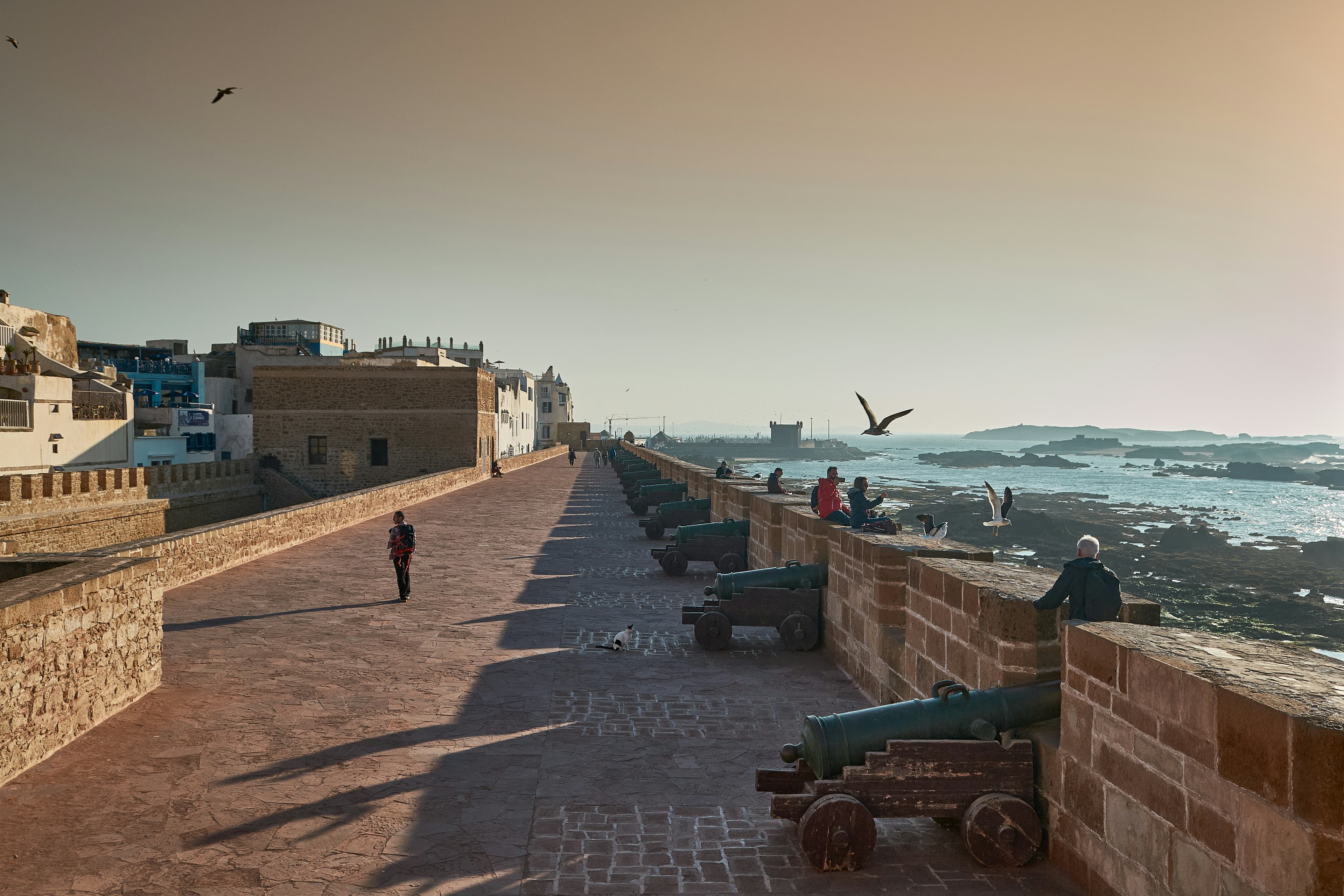
The 18th-century sea ramparts running along Essaouira's northern edge are the city's most iconic sight. A row of large bronze cannons points out to sea from the bastion walls, with the Atlantic crashing against the rocks below. Below the ramparts, the argan wood craftsmen's souk lines a covered arcade.
Skala du Port — The Harbour Fort
The fortified harbour entrance with its pair of circular towers guards the old port. Fishing boats in vivid blues and yellows crowd the inner basin. The daily fish auction at the quayside market (around 8–9am) is one of the most authentic scenes in any Moroccan city.
Essaouira Medina
Unlike Morocco's other major medinas, Essaouira was built by a French architect in the 18th century to a relatively rational grid plan. The result is a UNESCO-listed medina of blue-painted walls, whitewashed buildings, and wide enough streets to feel airy — a stark contrast to the claustrophobic alleys of Fes.
Gnawa Music & the Moulay Hassan Square
Essaouira is the spiritual home of Gnawa music, a centuries-old trance tradition brought to Morocco by sub-Saharan enslaved people and now a UNESCO Intangible Cultural Heritage. The main square (Place Moulay Hassan) is the natural gathering place for musicians, artists, and locals at dusk.
Fresh Seafood at the Port Grills
The line of open-air fish grill restaurants inside the port complex is one of the great cheap-eat experiences in Morocco. Choose from the morning's catch displayed on ice — sardines, sea bass, sole, octopus, prawns, and whatever else the boats brought in — and it is grilled on the spot and served with bread, olives, and harissa.
Thuya Wood Artisan Workshops
Essaouira is the world capital of thuya wood marquetry — an artisanal tradition using the root burl of the local araar tree. Workshops lining the rampart arcade produce inlaid boxes, chess sets, frames, and furniture using techniques passed down through generations. The wood's natural grain creates patterns that look painted but are entirely natural.
Essaouira Beach & Wind Sports
Essaouira's 10-kilometre beach has been a world-class wind sports destination for decades. The consistent Alizé trade winds make it ideal for kite surfing and windsurfing. For non-surfers, the beach is beautiful for walks and horse rides — but the wind makes lingering on a towel challenging.
Art Galleries & the Creative Quarter
Essaouira has one of Morocco's most active contemporary art scenes — galleries and studios line the medina streets, showing work by local, Moroccan, and international artists. The city's light, proximity to the sea, and relaxed pace have attracted painters and photographers for over a century.
Day trip vs overnight — which is better?
| Day trip | 1–2 nights | |
|---|---|---|
| Time in Essaouira | 4–5 hours | 1–2 full days |
| Seafood lunch at the port | ✓ Possible | ✓✓ At leisure |
| Rampart sunset | ✗ Usually miss it | ✓ Best light |
| Evening Gnawa music | ✗ No | ✓ Yes |
| Morning medina quiet | ✗ No | ✓ Yes |
| Total cost (from Marrakech) | €30–55/person | €60–120/person |
| Best for | Tight itinerary, beach vibe | Those who want to feel the city |
How to get to Essaouira
| From | Option | Duration | Cost |
|---|---|---|---|
| Marrakech | CTM / Supratours bus | 3 h | €8–12 |
| Marrakech | Shared grand taxi | 3 h | €12–15/seat |
| Marrakech | Private taxi | 2.5 h | €80–100 |
| Marrakech | Organised day trip | 3 h (guided) | €35–55/person |
| Agadir | CTM bus | 2.5 h | €6–9 |
| Casablanca | CTM bus (via Marrakech) | 6.5 h | €20–28 |
Best time to visit Essaouira
Spring
Mar–May · 18–24°C
★★★★★
Best all-round. Mild, moderate wind, wildflowers on the coast. Book ahead for Gnawa Festival (June).
Summer
Jun–Aug · 22–28°C
★★★☆☆
Peak season. Wind is strongest (ideal for kite surfers). Crowded and 2× accommodation prices.
Autumn
Sep–Nov · 18–24°C
★★★★★
Best value. Similar weather to spring, fewer tourists, great light for photography.
Winter
Dec–Feb · 12–18°C
★★★☆☆
Quiet and cheap. Occasional rain. The city feels almost private — great for artists and slow travellers.
Where to stay in Essaouira
Stay inside the medina for the full experience — the riad guesthouses within the old walls are Essaouira at its best. The Bab Marrakech area (eastern medina entrance) and the streets near Moulay Hassan square are the most convenient locations.
Budget
€25–50/night
Basic medina guesthouses and small riads. Often includes breakfast. The atmosphere of a traditional house at hostel prices.
Mid-range
€60–110/night
Comfortable riads with en-suite rooms, roof terraces, ocean views in some. The sweet spot for most visitors.
Luxury
€140–280/night
Boutique design riads with sea-facing terraces, private hammam, and curated décor. Some face the ramparts directly.
Beach hotels
€80–200/night
Located outside the medina walls along the beach road. Convenient for wind sports, but you lose the medina atmosphere.
Frequently asked questions about Essaouira
Is Essaouira worth visiting?+
Yes — Essaouira is consistently rated one of Morocco's most enjoyable cities. Its UNESCO-listed medina, Atlantic ramparts, fresh seafood at the port, Gnawa music scene, and relaxed atmosphere are unique. It is the antithesis of Marrakech's intensity. The main caveat: the Atlantic wind blows almost constantly — plan for it, and it becomes a feature rather than a bug.
How do you get from Marrakech to Essaouira?+
CTM or Supratours bus from Marrakech Bab Doukkala station: 3 hours, €8–12, several daily departures. Shared grand taxi: 3 hours, €12–15 per seat. Private taxi: €80–100. Organised day trip with driver and guide: €35–55 per person. There is no train between Marrakech and Essaouira.
Is Essaouira a good day trip from Marrakech?+
A day trip is doable but rushed — you get 4–5 hours in the city. The standard day trip departs Marrakech at 8am, arrives 11am, departs 5pm. You can see the medina, ramparts, and port in that time. But you miss the morning port (fish auction at 8am), the sunset from the ramparts, and the evening atmosphere. One night transforms the visit completely.
What is Essaouira known for?+
Five things: (1) UNESCO-listed blue-and-white medina and 18th-century sea ramparts; (2) fresh Atlantic seafood grilled at the port; (3) Gnawa music — a trance tradition originating from sub-Saharan Africa, with an annual festival drawing 500,000 visitors each June; (4) world-class kite surfing and windsurfing; (5) thuya wood marquetry craftsmanship unique to this part of Morocco.
Is the wind a problem in Essaouira?+
Depends on your plans. The Alizé trade winds blow at 25–35 km/h almost year-round — perfect for kite surfers, challenging for beach sunbathers. In the medina and behind the ramparts it is sheltered. The wind keeps temperatures significantly cooler than inland Morocco, which is a major advantage in July and August. Pack a light windbreaker even in summer.
When is the Essaouira Gnawa Music Festival?+
The Gnawa and World Music Festival takes place annually in June, usually the third weekend. It is one of Morocco's largest music festivals, with free outdoor stages throughout the medina running for 4 days. Book accommodation 2–3 months in advance — the city fills completely during the festival.
What is the best time to visit Essaouira?+
April–June and September–October are the best months. Temperatures are 20–26°C, wind is moderate, and crowds are manageable. July and August are peak season — hot (but wind helps), crowded, and expensive. November–February is the quietest and cheapest period: cool, occasional rain, and a genuinely local atmosphere.
Related guides
Adding Essaouira to your Morocco trip?
Ask our AI assistant whether Essaouira works better as a day trip or an overnight stop based on your itinerary.
Plan my Morocco trip →