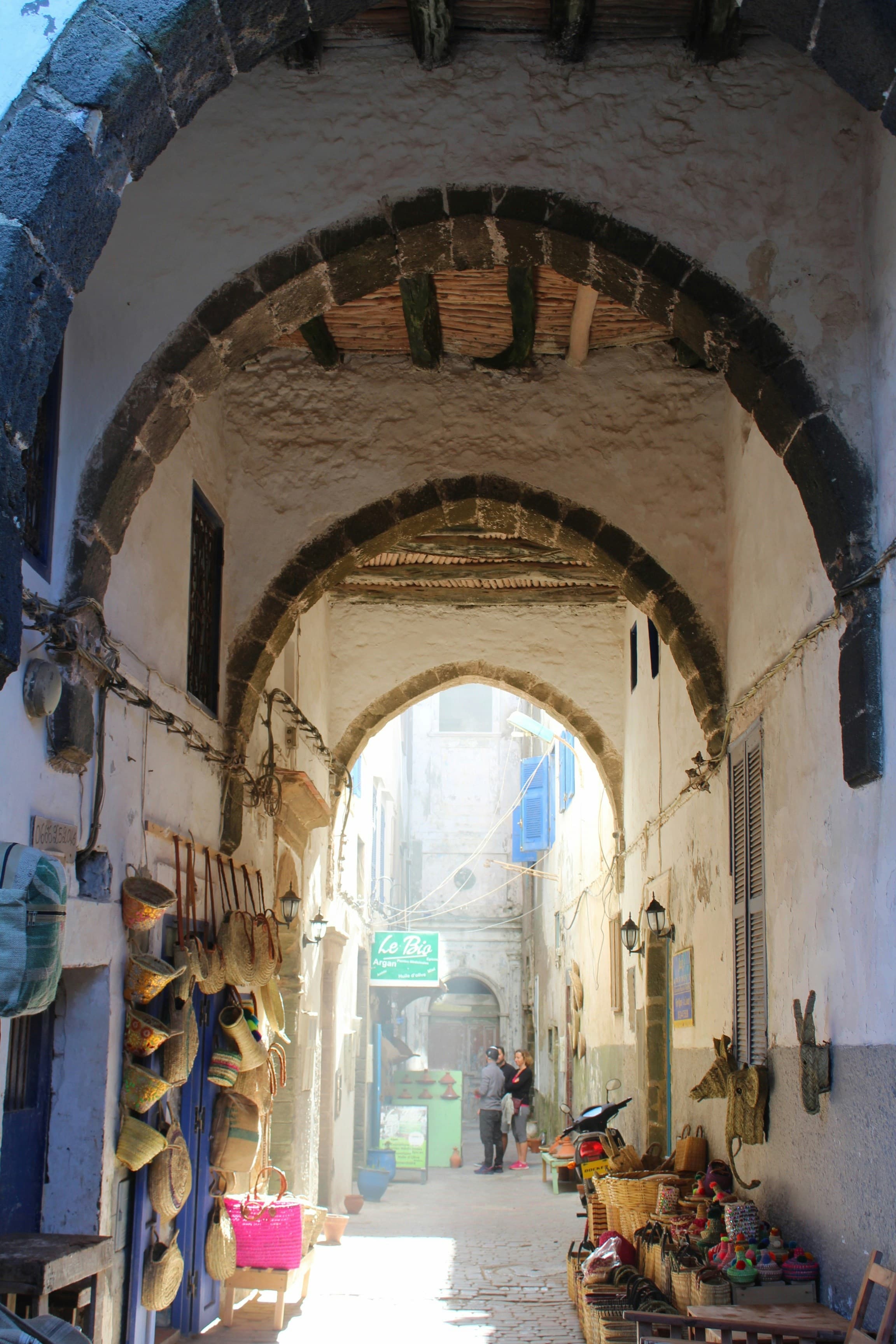
Fes at a glance
Fes divides travelers. Some find it the highlight of Morocco — a city where 1,200 years of history feels genuinely intact, where the smells and sounds of the medina are overwhelming in the best possible way. Others find it exhausting: the narrow streets are relentless, the fake guides persistent, and the heat in summer brutal.
The key to Fes is preparation. A licensed guide for your first morning transforms an overwhelming maze into a navigable place. After that, the medina opens up into something extraordinary.
9 best things to do in Fes
Chouara Tanneries
The most iconic image of Fes: hundreds of circular stone vats filled with dye — white chalk, terracotta, saffron yellow, and indigo. Workers stand in the pits barefoot, treading leather by hand using methods unchanged since the 11th century.
Bou Inania Madrasa
Built in 1351 by the Marinid sultan Abu Inan, this Islamic boarding school is one of the finest examples of Marinid architecture in Morocco — intricate carved cedar wood, geometric zellige tilework, and a marble fountain courtyard that whispers with the sound of water.
Al-Qarawiyyin Mosque & University
The spiritual and intellectual heart of Fes. The university predates Oxford by 250 years. The mosque complex covers 3,000 square metres and can hold 22,000 worshippers. Its library holds over 4,000 manuscripts, including one of the oldest known Qurans.
Bab Bou Jeloud (the Blue Gate)
The elaborate horseshoe arch gate built in 1913 is the most photographed landmark in Fes. From here, the main artery of the medina — Talaa Kebira — leads directly to Bou Inania Madrasa and into the heart of the old city.
Nejjarine Fountain & Museum of Wooden Arts
A perfectly preserved 18th-century funduq (caravanserai) that once housed merchants and their goods. Now a museum of Moroccan woodwork with carved ceilings, latticed windows, and three storeys of carved cedar artefacts.
The Mellah — Fes Jewish Quarter
The Mellah is one of the oldest Jewish quarters in Morocco, established in 1438. While the Jewish community has largely emigrated, the quarter retains its distinctive architecture — ornate balconies, carved stucco, and the memory of a 600-year coexistence.
Attarine Madrasa
Built in 1323, the Attarine Madrasa (named after the adjacent spice and perfume souk) has arguably the finest decorative tilework in Morocco. The carved stucco above the tiles is original 14th-century work.
Borj Nord Arms Museum
A 16th-century Portuguese-style fortress on the hill above Fes, now housing a collection of historical weapons — swords, cannons, armour, and muskets spanning six centuries of Moroccan military history. The rooftop view across the medina is worth the climb alone.
Fes Cooking Class
Fassi cuisine is considered Morocco's most refined: b'stilla (the sweet-savoury pigeon or almond pie), slow-cooked lamb tagine, bastilla with seafood, and the elaborate pastries served at weddings. A cooking class is the best way into the food culture.
Best time to visit Fes
| Season | Temp | Crowds | Verdict |
|---|---|---|---|
| Spring (Mar–May) | 18–26°C | Moderate | ★★★★★ Best — ideal temperatures, wildflowers in the hills, great light |
| Summer (Jun–Aug) | 30–38°C | High | ★★☆☆☆ Avoid — medina streets trap heat; 35°C+ feels brutal in narrow alleys |
| Autumn (Sep–Nov) | 18–28°C | Low–moderate | ★★★★★ Best — same quality as spring with even fewer crowds |
| Winter (Dec–Feb) | 8–16°C | Low | ★★★☆☆ Good — cold but manageable; rain adds atmosphere; cheapest prices |
How to get to Fes
| From | Option | Duration | Cost |
|---|---|---|---|
| Marrakech | CTM / Supratours bus | 8–9 h | €18–22 |
| Marrakech | RAM / Air Arabia flight | 1 h | €45–90 |
| Marrakech | Desert tour (3-day) | 3 days via Merzouga | €90–200 |
| Casablanca | ONCF train | 3.5 h | €14–20 |
| Chefchaouen | CTM bus | 3 h | €8–10 |
| Rabat | ONCF train | 2.5 h | €10–14 |
| Tangier | CTM bus | 4.5 h | €12–16 |
Where to stay in Fes
Stay inside the medina (Fes el-Bali) — the new city (Ville Nouvelle) is convenient but misses the point entirely. Riads — traditional courtyard houses converted into guesthouses — are the only way to experience the medina properly.
Budget
€25–50/night
Basic riads in the Bou Jeloud area. Shared bathrooms common. The atmosphere of a medina riad at hostel prices.
Mid-range
€60–120/night
Comfortable riads with en-suite rooms, rooftop terraces, and included breakfast. The sweet spot for most visitors.
Luxury
€150–350/night
Restored palace riads near the tanneries and Al-Qarawiyyin. Pool, hammam, private chef — the full Fassi experience.
What to eat in Fes
Fassi cuisine (from Fes) is considered the most refined in Morocco — heavily influenced by Andalusian refugees who arrived in the 9th century, and defined by sweet-savoury combinations, layered spicing, and slow-cooked techniques.
B'stilla (bastilla)
A flaky warqa pastry pie filled with pigeon (or chicken/almond) and spiced with cinnamon, saffron, and sugar. The defining dish of Fes — sweet, savoury, and extraordinary.
Trid
Layered paper-thin crêpes soaked in chicken broth and topped with whole-roasted chicken, caramelised onions, and chickpeas. A celebration dish, rarely found outside Fes.
Harira soup
Tomato and lentil soup thickened with flour, spiked with coriander and lemon. Traditionally served to break the Ramadan fast; available year-round at street stalls for €0.50.
Msemen with argan honey
Flaky griddle-fried flatbread served with argan oil and wildflower honey. The standard Fassi breakfast — find it at any hole-in-the-wall café in the medina.
Chebakia (sesame cookies)
Rose water and honey-glazed sesame pastries fried in oil. Sold by weight in the pastry souks near Bab Bou Jeloud. Perfect with mint tea.
How to navigate Fes medina
Hire a guide first
A 3-hour guided morning walk on day 1 teaches you the medina's logic. After that, exploring alone becomes enjoyable, not terrifying. Cost: €25–40. Book via your riad.
Use GPS as a compass
Google Maps works but gives inaccurate turn-by-turn in the medina. Use it to know your general direction, not the exact route.
Key landmarks
Bab Bou Jeloud (Blue Gate) is the main entrance. Chouara tanneries are northeast. Al-Qarawiyyin is central. When lost, ask for "Bab Bou Jeloud" — any local knows it.
Avoid fake guides
Men who approach you outside Bab Bou Jeloud offering to "help" are often unofficial guides. Politely decline: "Shukran, ana bghit namshi wehddi" (Thank you, I want to walk alone).
Best walking hours
8–10am (before tour buses) and 4–6pm (golden hour light, local life returns). Avoid 11am–2pm in summer — narrow streets trap heat.
Dress appropriately
Cover shoulders and knees in the medina, especially near the mosque. Lightweight linen is ideal — cool and respectful. See the Morocco dress code guide for the full breakdown.
Frequently asked questions about Fes
How many days do you need in Fes?+
Two full days is the minimum — one with a licensed guide (medina highlights, tanneries, madrasas), one on your own. Three days is the comfortable option: you get to wander without a schedule, discover hidden cafés, and visit the Mellah and Borj Nord at leisure.
Is Fes safe for tourists?+
Fes is generally safe. The main nuisance is unsolicited "guides" near the main gates. Beyond that, petty crime is rare. The medina feels busy and chaotic but not threatening. Solo women travelers report that Fes is significantly less hassle than Marrakech, though still requires confidence in public spaces.
Is it easy to get lost in Fes medina?+
Yes, and it happens to everyone, even regulars. The medina has 9,400 streets and Google Maps is imprecise inside it. The practical advice: note the direction of Bab Bou Jeloud, ask shopkeepers when lost (they are almost always helpful), and embrace the disorientation — some of the best discoveries happen in wrong turns.
What is the best time to visit Fes?+
March–May and September–November. Temperatures are 18–26°C, crowds are moderate, and the light in the medina is excellent. Summer (June–August) reaches 35–40°C in the narrow streets — the heat combined with minimal ventilation is genuinely exhausting. Winter is cool but manageable, with the fewest tourists and cheapest accommodation.
How do you get from Marrakech to Fes?+
Three options: (1) CTM bus — 9 hours, €18–22, departs several times daily; (2) flight with RAM or Air Arabia — 1 hour, €45–90; (3) desert tour — most 7 or 10-day Morocco itineraries cover the Marrakech–Fes leg as a 3-day road trip via the southern kasbahs and Merzouga Sahara.
Do you need a guide in Fes?+
A licensed guide is strongly recommended for at least your first half-day. The medina is genuinely hard to navigate, and key sites like the Chouara tanneries are not findable without local knowledge. Cost: €25–40 for 3 hours. Your riad can book a reliable licensed guide. Avoid unofficial guides who approach at the gates.
Fes or Marrakech — which should I visit?+
Visit both if you have 7+ days. Marrakech is more accessible and better connected for desert trips. Fes is older, more historically intact, and offers a deeper medina experience. Fes rewards those who want to understand Morocco's culture and history; Marrakech is the better base for activity-focused trips. The classic Morocco circuit includes both.
Related guides
Planning a trip that includes Fes?
Tell our AI assistant your travel dates and interests — get a personalised Fes itinerary and tour recommendations.
Plan my Morocco trip →